Robotic Quarterback
Northeastern University – Mechanical Engineering
Team of 6 | Capstone Project
Tools: SolidWorks, FEA, linear actuators, Arduino, stepper & servo motors
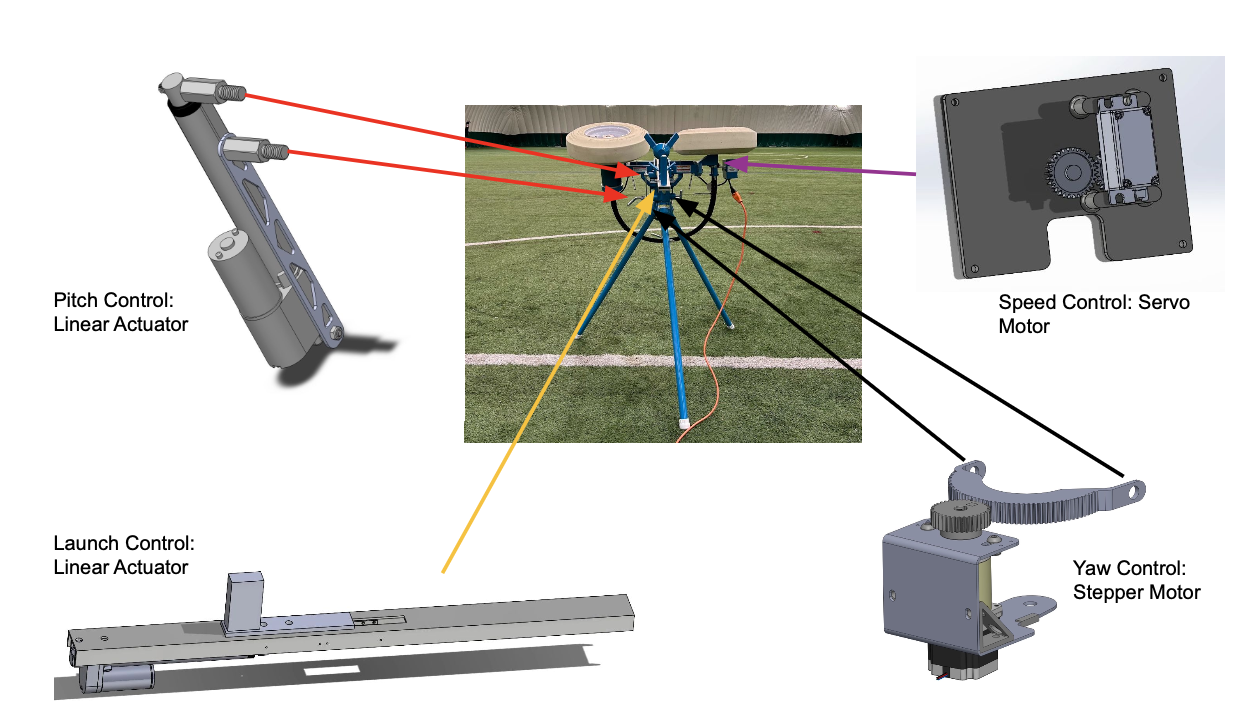
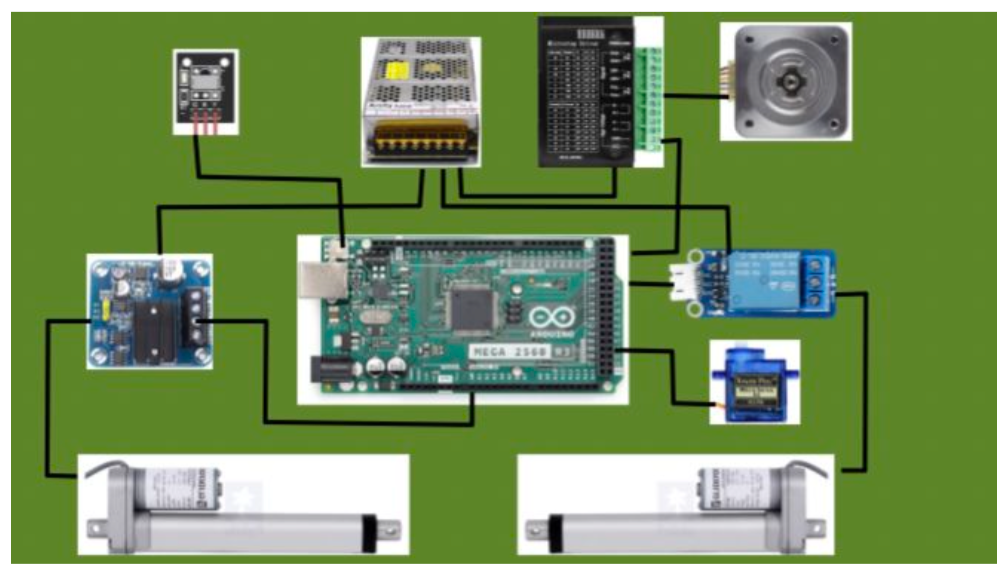
This project was my senior design capstone project. Our goal was to create an automated football passing machine that allows receivers to train on their own, maximizing practice time and improving their catching skills. To achieve this, we started with the industry-leading JUGS machine and added automated pitch, yaw, speed, and firing systems, enabling accurate targeting and consistent delivery of footballs to predetermined spots on the field. The original pitch adjustment was replaced with a linear actuator capable of raising and lowering the machine. A second actuator was added to automate the firing mechanism, mounted beneath the existing firing mechanism with precisely positioned linear bearings. Automating the yaw mechanism proved to be the most complex challenge. Our design used a custom adapter plate that mounted gear fastened to the base. A small servo was used to control the launcher wheel’s RPM. All motors and sensors were connected to an Arduino Mega, which served as the central controller and processor. Plays could be preprogrammed with a timer or triggered remotely from the field. each modification was designed as a bolt-on component with straightforward assembly steps, allowing the system to be marketed as an affordable upgrade kit to the machine priced at $500 or less.
Full System Integration
Personal Contributions
▪ Coordinated mechanical design, integration, and testing across subassemblies
▪ Contributed to the firing system subassembly end-to-end, from concept through CAD, prototyping, manufacturing, and field testing
▪ Performed analytical load calculations to support simulations, size actuators and validate load cases under dynamic operation
▪ Integrated control components and electronics with mechanical hardware, ensuring reliable actuation and safe operation
▪ Led system-level mechanical and electromechanical integration, iterating based on test results to achieve cohesive system performance
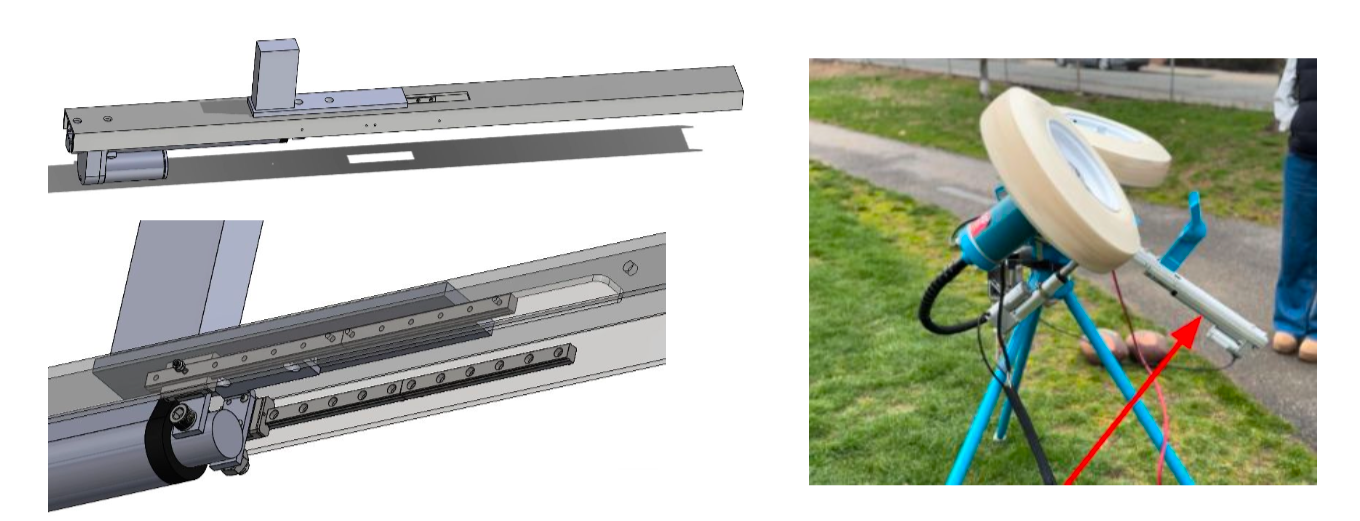
Launch Mechanism
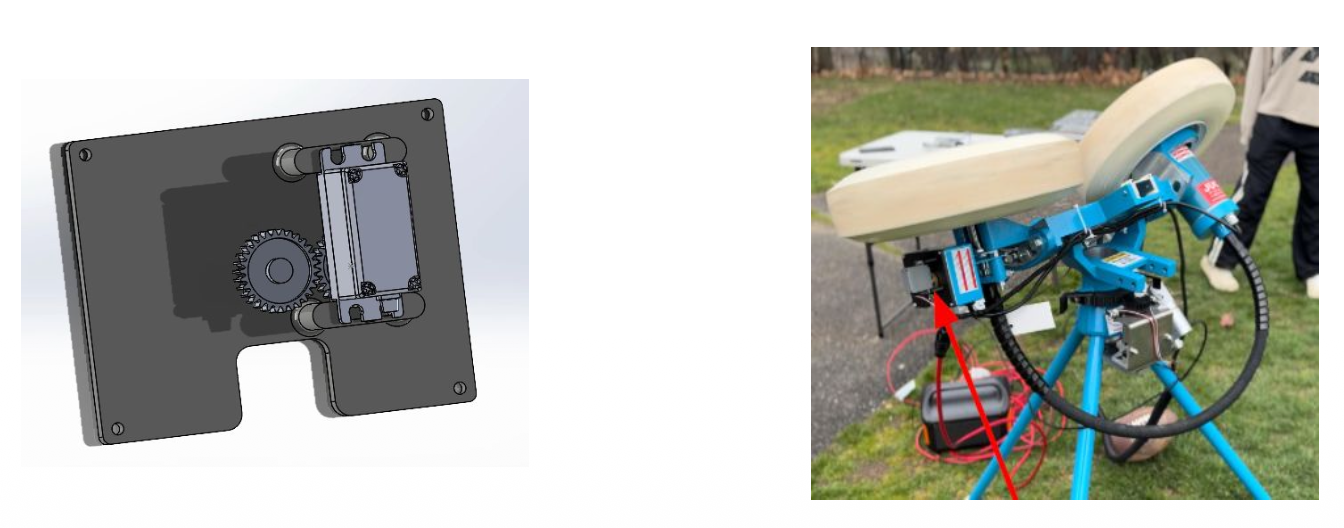
Speed Control
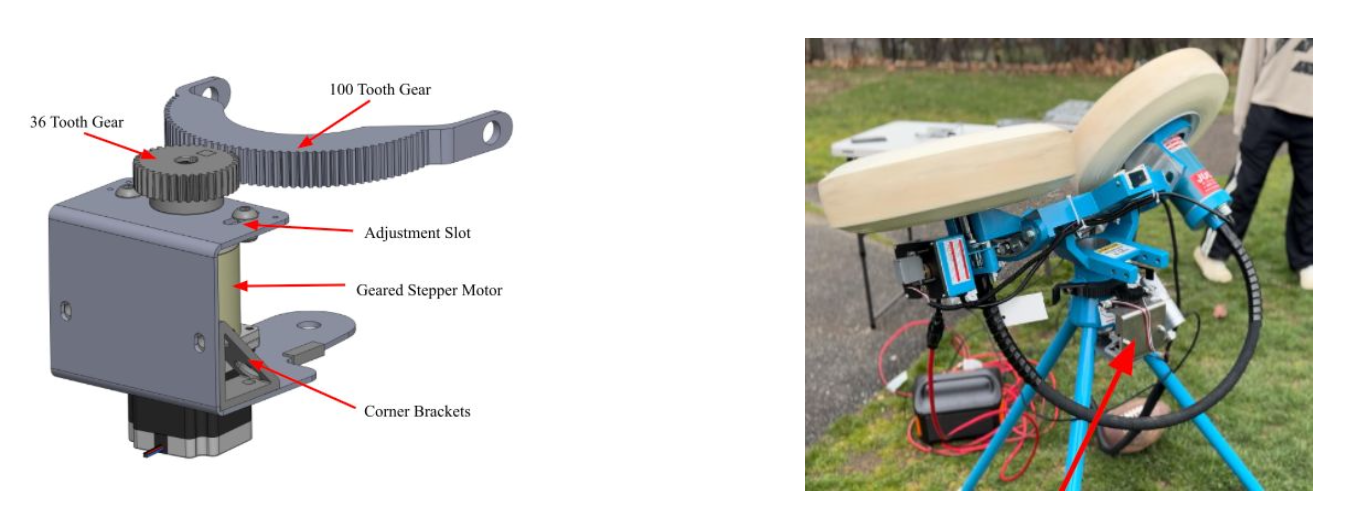
Yaw Mechanism
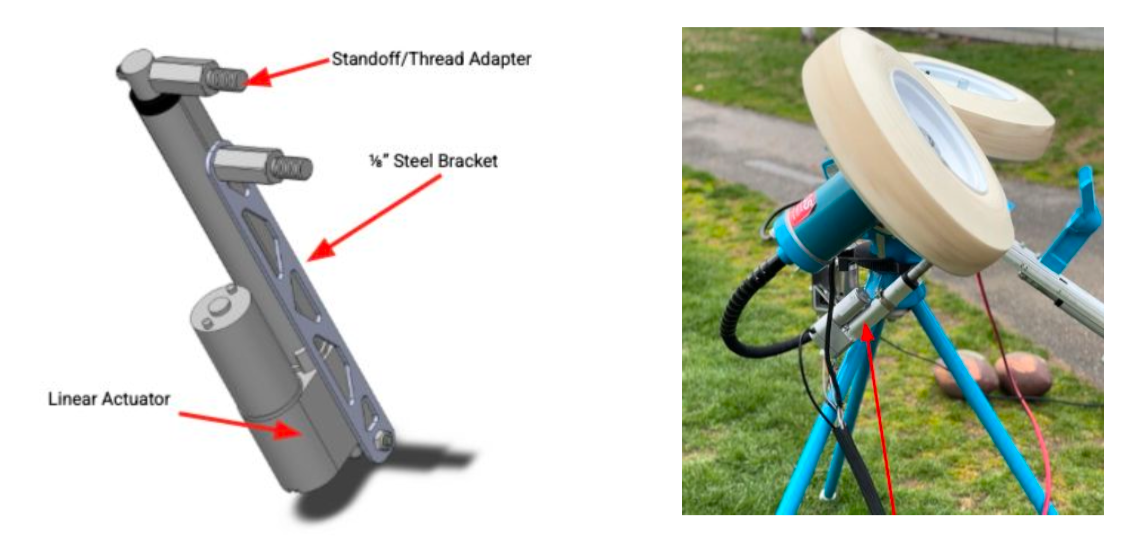
Pitch Mechanism
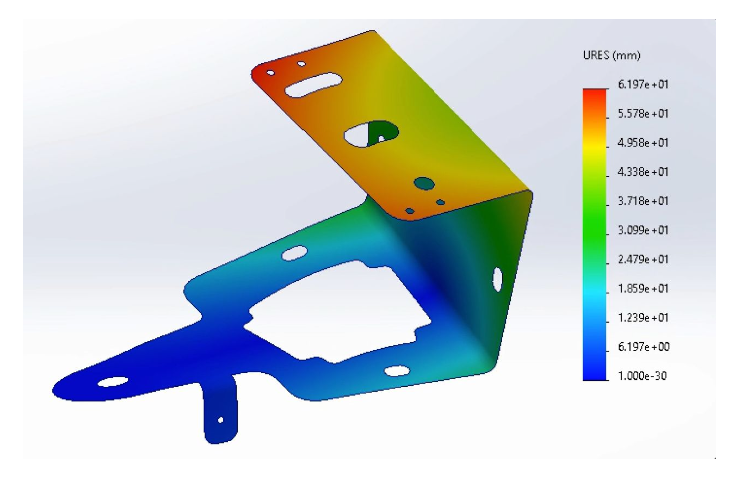
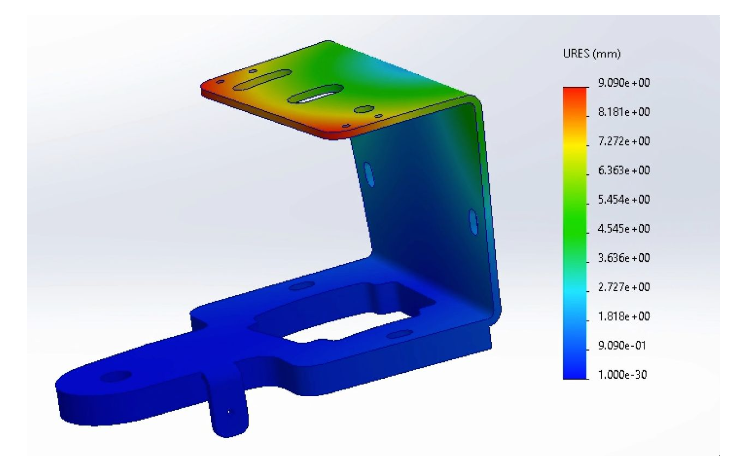
Structural brackets were validated under worst-case operational loads using finite element analysis, confirming acceptable stress levels and deflections within design safety margins. System-level integration testing verified reliable coordination between actuators, motors, and control electronics during repeated firing and repositioning cycles.
FEA Analysis validating structural brackets under operational loads