Motorized Tri-Wheel Furniture Dolly
Northeastern University – Mechanical Engineering
Team of 5 | Design & Analysis Project
Tools: SolidWorks, FEA, 3D Printing, drivetrain sizing, analytical stress & fatigue analysis, materials selection, design for manufacturability
Problem & Context
Moving heavy furniture across stairs requires significant manual force and poses safety risks. Existing dollies lack autonomous stair-climbing capability, while powered solutions are expensive and inaccessible. This project focused on designing a motorized tri-wheel dolly capable of climbing stairs under load while maintaining durability, user safety, and cost constraints.
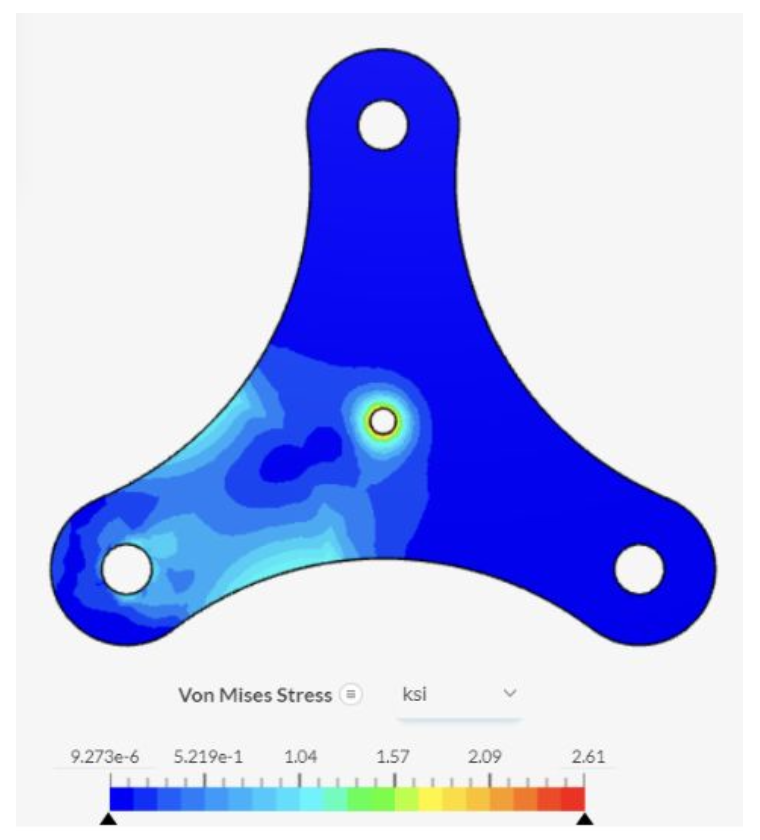
Von Mises stress distribution in tri-wheel plate
Solution: System Summary
Core System Features
▪ Tri-wheel climbing geometry enabling continuous contact on stairs
▪ Steel frame and platform designed for 300 lb load capacity
▪ Motorized drivetrain sized to overcome stair torque requirements
▪ Designed for independent operation with minimal user exertion
Structural Validation
▪ Frame and platform evaluated under worst-case stair-climbing load cases
▪ Static stress and deflection analyses performed to ensure adequate stiffness under a 300 lb payload
▪ Fatigue considerations used to verify long-term durability under repeated loading
▪ Design validated to meet safety factors across critical structural components
Tri-Wheel & Axle Analysis
▪ Tri-wheel plates analyzed as cantilevered members during stair engagement
▪ Combined bending and torsional loading evaluated at critical locations
▪ Axle assessed for bending, torsion, and fatigue using free-body diagram-based load cases
Drivetrain Sizing
▪ Required output torque derived from stair-climbing geometry and payload loads
▪ Gear reduction selected to meet torque demand while maintaining controlled climbing speed
▪ Motor selected to meet performance requirements with safety margin
Personal Contributions
▪ Contributed to mechanical design and analysis of the tri-wheel dolly structure
▪ Performed static and fatigue analysis on critical components: frame, axle, platform, and wheel plates
▪ Conducted free-body diagram analysis, bending, shear, torsion, and fatigue calculations to validate safety factors
▪ Supported drivetrain sizing, including torque requirements, gear reduction, and motor selection
▪ Evaluated connections (bolts and welds) under static and cyclic loading to identify design constraints
▪ Participated in design iteration based on analytical results and safety margins
Concept: Motorized tri-wheel dolly designed for autonomous stair climbing under load
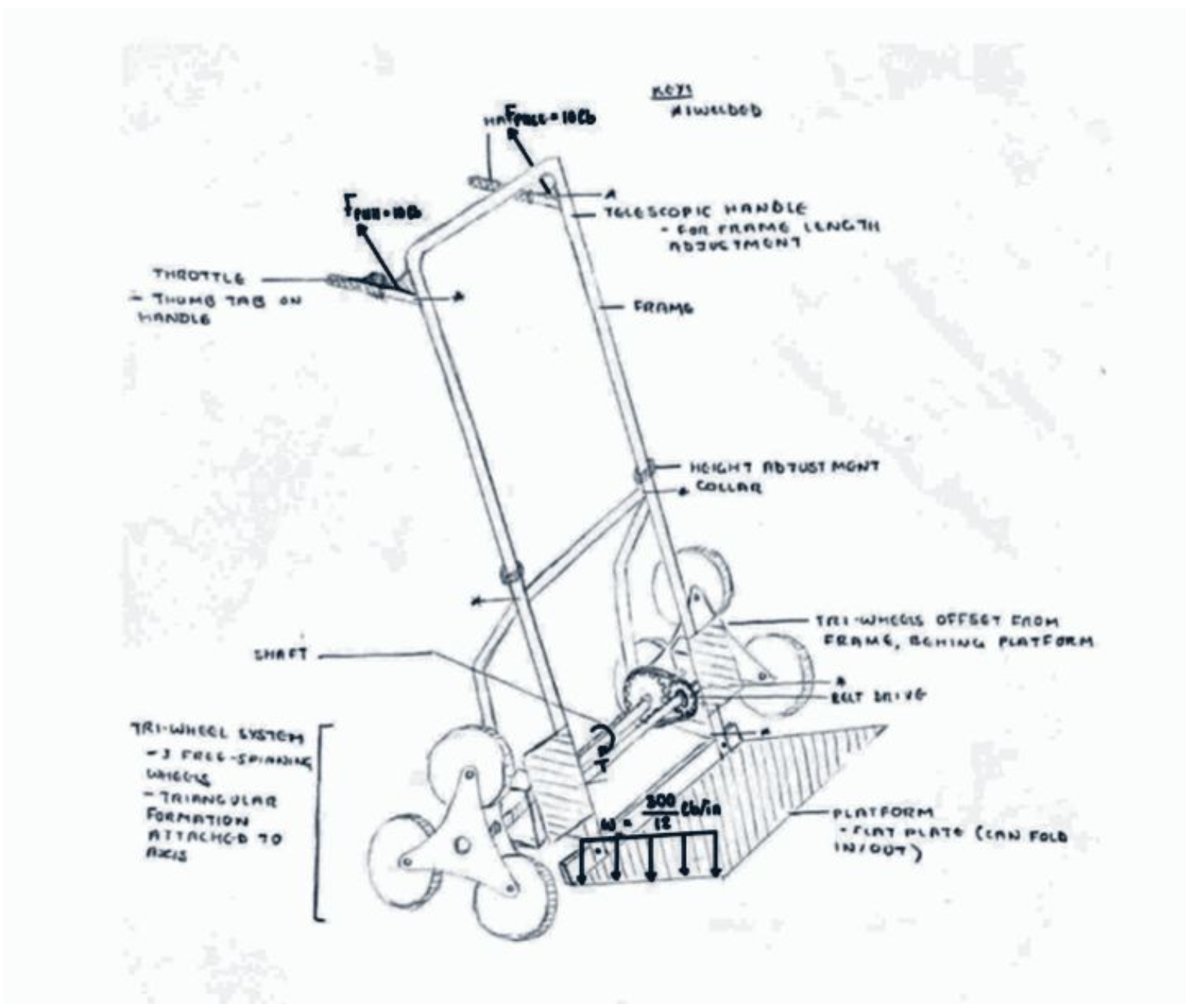
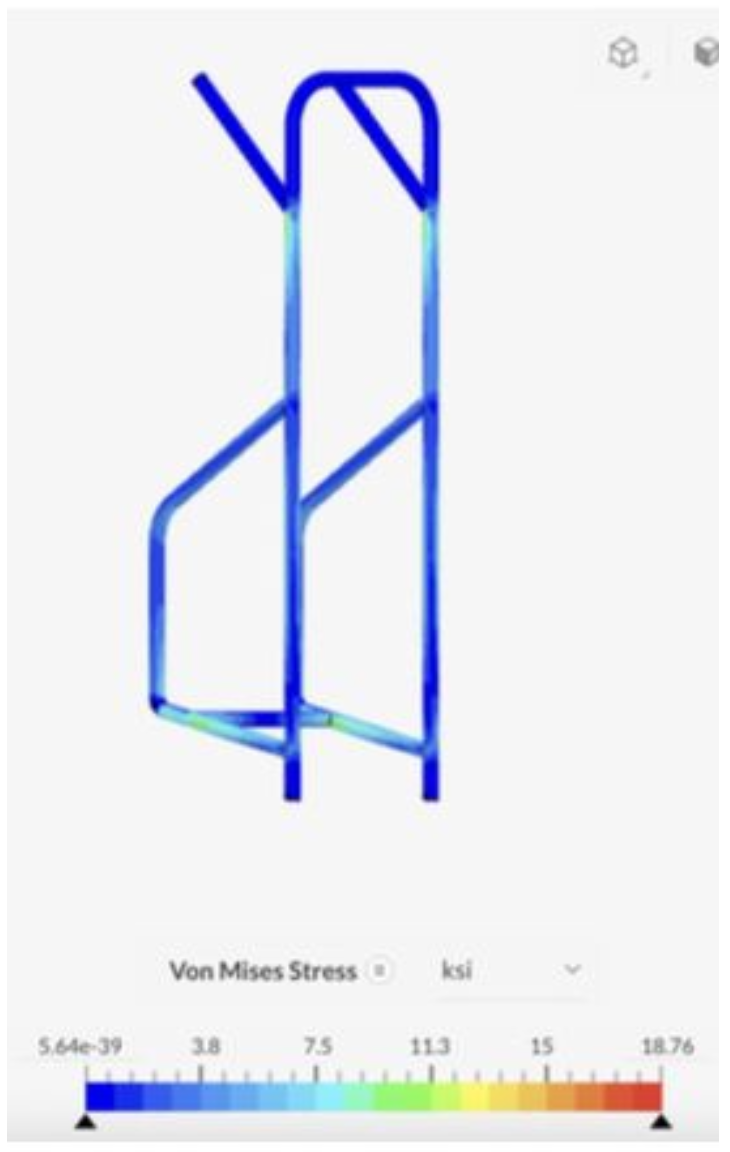
Von Mises stress under angled loading
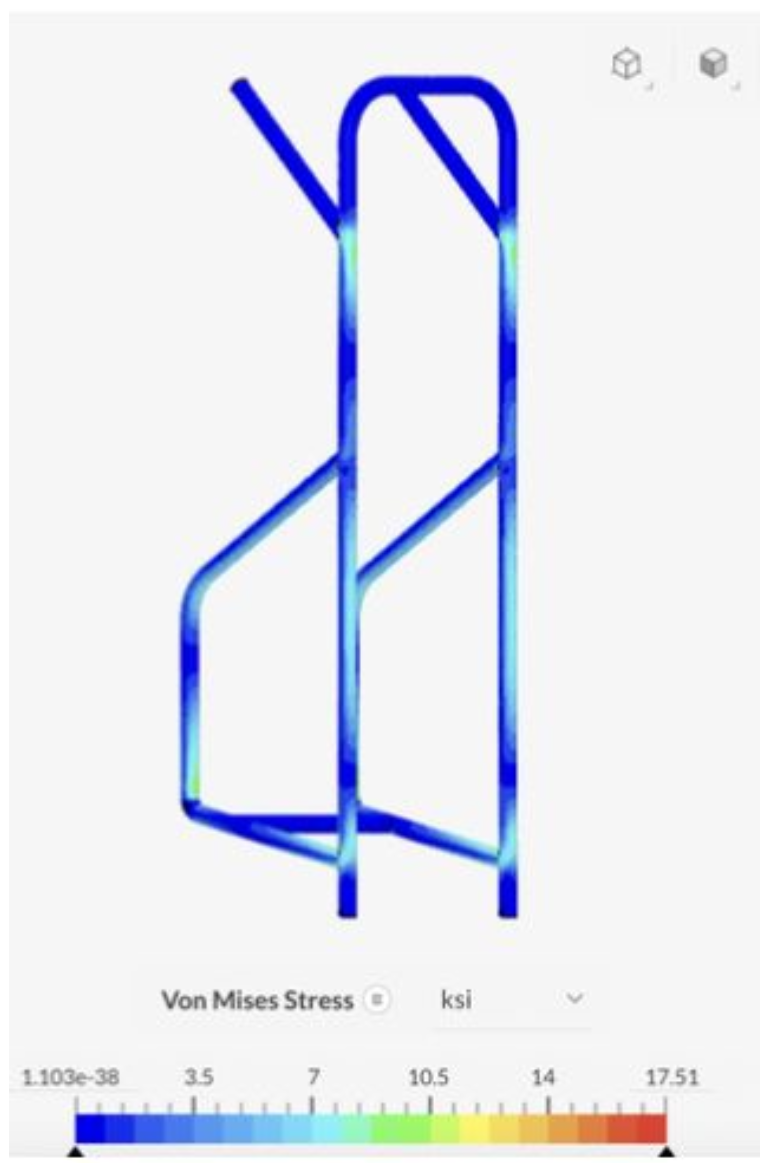
Von Mises stress under horizontal loading
Connections & Manufacturability
▪ Welded joints and fasteners evaluated under static and cyclic loading
▪ Bolt grades and weld sizes selected to satisfy strength and fatigue requirements
▪ Analysis used to inform manufacturable design choices and connection layout
System Feasibility
▪ Designed using commercially available components
▪ Estimated system cost of $560, balancing performance, safety, and accessibility